

As smartphones, laptops, tablets, wearable devices, and other consumer electronics become increasingly sophisticated, battery performance and reliability have become essential to product quality. Manufacturers need more than conventional charge and discharge testing. They also need to verify battery management functions, communication interfaces, protection mechanisms, and system behavior under different operating conditions.
Smart device battery testing solutions integrate battery test equipment, communication interfaces, and automated test procedures to help manufacturers evaluate battery performance at both the cell and battery pack levels. For applications involving battery management systems (BMS) and Controller Area Network (CAN) communication, the test setup must support coordinated data exchange between the testing equipment and the battery system.
WOSIAN provides battery testing equipment and configurable testing solutions for battery manufacturers, electronics manufacturers, research laboratories, and quality control teams working with consumer electronic batteries.
1. Battery Testing Requirements for Smartphones, Laptops, and 3C Electronics
Different smart devices place different demands on their batteries. A smartphone battery must support compact packaging and frequent charging, while a laptop battery pack may incorporate multiple cells, protection circuits, temperature sensors, and a dedicated BMS.
Common battery testing applications include:
- Smartphone and tablet batteries: Capacity verification, charge and discharge performance, cycle life evaluation, and protection function testing.
- Laptop battery packs: Pack-level performance testing, voltage and current monitoring, temperature monitoring, and BMS communication verification.
- Wearable and portable electronic devices: Low-current testing, capacity evaluation, and performance verification under application-specific operating conditions.
- Other 3C electronic products: Battery performance validation, production quality inspection, and reliability testing according to defined test procedures.
The appropriate test method depends on battery chemistry, rated voltage, capacity, pack architecture, communication protocol, and the manufacturer’s validation requirements.
2. Why Battery Testing Requires BMS Communication
A battery management system monitors and manages important battery parameters, which may include cell voltage, pack voltage, current, temperature, state of charge (SOC), and fault status.
When a battery pack incorporates a BMS, testing only its external voltage and current may not provide sufficient information about the complete system. Communication with the BMS can help engineers obtain additional operating data and evaluate whether the battery management functions respond correctly to specified test conditions.
Depending on the battery design and communication interface, BMS-related testing may involve:
- Reading battery voltage, current, and temperature data.
- Monitoring reported SOC and other available battery status information.
- Checking communication availability and data consistency.
- Verifying reported alarms and fault conditions under approved test procedures.
- Comparing BMS-reported measurements with independent measurements from the test equipment.
- Recording communication data alongside charge and discharge test results.
The actual functions available depend on the BMS firmware, communication protocol, and test system configuration.
3. CAN Communication Between Battery Test Equipment and the BMS
CAN (Controller Area Network) is a communication protocol widely used in embedded control systems. Depending on the battery architecture, CAN may be used to exchange battery status information, operating commands, and fault messages between the BMS and external equipment.
For battery testing applications, CAN communication can support coordinated testing between the battery pack and the test system.
A typical test workflow may include the following steps:
- Establish communication: Connect the battery pack’s CAN interface to a compatible communication adapter or test system.
- Configure communication parameters: Set the appropriate baud rate, message identifiers, data format, and other protocol-specific parameters.
- Read battery information: Acquire supported battery status messages, including voltage, current, temperature, SOC, or fault information where available.
- Coordinate test procedures: Where supported, exchange authorized control commands and coordinate charging or discharging with the BMS.
- Monitor test behavior: Record electrical measurements and communication data throughout the test.
- Generate test reports: Organize the collected measurements, communication status, and test results for engineering analysis and quality documentation.
CAN communication alone does not guarantee compatibility between different battery packs. The message definitions, command permissions, timing requirements, and safety interlocks must also be considered.
For systems using CAN-based application protocols, such as CANopen or a manufacturer-specific CAN protocol, the required protocol support should be confirmed before selecting the equipment.
4. Integrating Battery Cyclers with BMS Testing
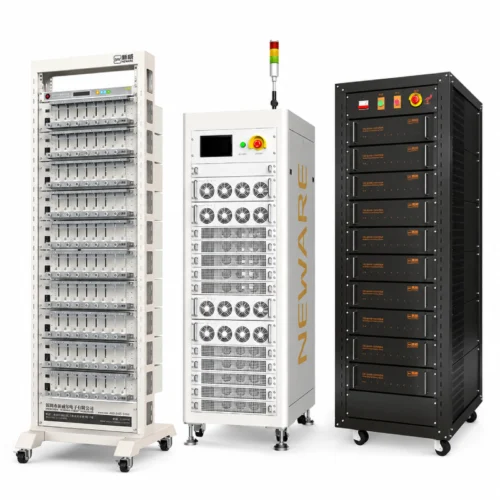
Battery cyclers provide controlled charge and discharge capabilities and are commonly used to evaluate battery capacity, energy, efficiency, cycle performance, and other electrical characteristics.
When integrated with a compatible BMS communication interface, a battery testing system can combine electrical measurements with battery management data.
Key functions to consider include:
Charge and Discharge Control
The test equipment applies programmed current, voltage, or other supported operating profiles within the equipment’s rated limits. Test procedures should account for the battery manufacturer’s specified operating limits and the BMS protection settings.
Synchronized Data Acquisition
Voltage, current, temperature, and available BMS communication data can be collected and time-aligned where the system supports synchronized acquisition. This helps engineers investigate relationships between electrical behavior and reported battery status.
BMS Status Monitoring
The system can monitor available status messages, alarms, and fault indicators during testing. Engineers can use these records to investigate unexpected interruptions, protection events, or communication failures.
Automated Test Sequences
Programmable test procedures can reduce repetitive manual operations. Depending on system capabilities, sequences may include charging, resting, discharging, data acquisition, condition checks, and report generation.
Test Data Management
Structured data logging makes it easier to compare battery samples, track production batches, review test conditions, and identify deviations from defined acceptance criteria.
The specific level of integration depends on the selected battery cycler, software, communication hardware, and BMS interface.
5. Key Considerations When Selecting Smart Device Battery Testing Equipment
Selecting suitable equipment requires evaluating both electrical performance and communication requirements.
Battery voltage and current range
The test system must match the battery’s voltage range, charging and discharging current requirements, and power rating. Low-capacity consumer batteries and high-power laptop packs may require different equipment configurations.
Measurement accuracy and resolution
Measurement performance should meet the test objectives. Capacity verification, low-current testing, and detailed performance characterization may require different accuracy and resolution specifications.
Communication interface compatibility
Confirm whether the battery uses CAN, UART, SMBus, I²C, RS-485, or another interface. These interfaces are not interchangeable, and protocol support should be verified for the specific battery model.
BMS protocol and message definitions
Even when two battery packs use CAN, they may use different message identifiers, data scaling, communication schedules, and command definitions. The relevant protocol documentation is essential for reliable integration.
Channel count and production throughput
Research laboratories may prioritize flexible test procedures and detailed data analysis, while production environments may require multi-channel testing, repeatable sequences, and efficient sample handling.
Software integration and reporting
Evaluate whether the system supports programmable test profiles, data export, automated reporting, communication logging, and integration with existing manufacturing or laboratory workflows.
Safety and protection
The complete test setup should incorporate appropriate overvoltage, overcurrent, temperature, and other applicable protection measures. Battery fixtures, wiring, test enclosures, and emergency shutdown arrangements should be selected according to the battery and test conditions.
6. Typical Applications Across Consumer Electronics Manufacturing
Integrated battery testing solutions can support several stages of product development and manufacturing.
- Research and development: Characterize battery performance, investigate charging behavior, and evaluate battery pack designs.
- Incoming quality inspection: Verify specified electrical characteristics and screen battery samples against established acceptance criteria.
- **Production