

3C Battery Testing System. Consumer electronics manufacturers rely on reliable batteries to deliver consistent performance, charging efficiency, and service life. From smartphones and wireless earbuds to smartwatches, tablets, and other portable electronic devices, battery quality directly affects the user experience.
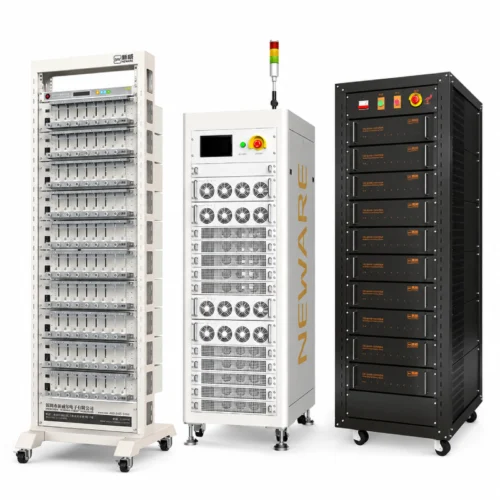
A professional 3C battery testing system helps manufacturers evaluate battery capacity, charge and discharge performance, energy efficiency, and cycle life. For low-voltage lithium-ion batteries and battery packs, a 5V testing platform with different current ranges provides a flexible solution for laboratory testing, production inspection, and battery research.
WOSIAN offers battery testing equipment solutions with 5V 6A, 5V 12A, 5V 15A, and 5V 20A configurations. These options allow customers to select a suitable testing range according to their battery specifications, test procedures, and production requirements.
1. What Is a 3C Battery Testing System?
A 3C battery testing system evaluates the electrical performance of batteries used in computers, communications equipment, and consumer electronics.
Unlike a general-purpose power supply, a battery tester measures the battery’s response during controlled charging and discharging. Depending on the equipment configuration, it can record voltage, current, capacity, energy, charging time, and other performance parameters.
Manufacturers commonly use these systems to:
- Verify battery capacity and energy output.
- Evaluate charging and discharging performance.
- Compare battery samples from different production batches.
- Monitor voltage and current throughout a test cycle.
- Conduct cycle life and capacity retention tests.
- Support incoming inspection and production quality control.
- Investigate battery performance deviations.
- Generate test records for quality management.
By applying consistent test procedures, manufacturers can compare battery samples more effectively and identify potential quality issues before products reach the market.
2. WOSIAN 5V Battery Testing Solutions: Four Current Configurations
Different consumer electronics batteries require different testing currents. A compact wearable battery, for example, may have different electrical requirements from a smartphone battery or a higher-capacity portable device battery.
WOSIAN provides four 5V testing configurations to address different current requirements.
5V 6A Battery Tester
Suitable for evaluating low-voltage batteries and battery packs whose charging and discharging current requirements fall within the equipment’s rated range. This configuration can support capacity verification, routine performance testing, and laboratory evaluation.
5V 12A Battery Tester
Provides a higher current range for battery testing applications that require greater charging or discharging current. It can support defined performance tests for compatible consumer electronics batteries and battery packs.
5V 15A Battery Tester
Offers a higher current capability for applications that need more demanding charge and discharge profiles. Engineers can use this configuration when the battery specifications and test procedures require currents within its rated operating range.
5V 20A Battery Tester
Supports applications that require the highest current range among these four configurations. It can serve compatible low-voltage battery packs that need higher-current testing, subject to the equipment’s power rating and the battery’s permitted operating limits.
The best configuration depends on the battery’s rated voltage, capacity, required current, and intended test profile. Before selecting a model, customers should also confirm channel count, measurement accuracy, and software functionality.
3. How to Choose Between 5V 6A, 12A, 15A, and 20A
The main difference between these configurations is their rated current capability. However, a higher current rating does not automatically make a tester more suitable for every battery.
Engineers should consider the following factors.
Battery Voltage
The 5V designation identifies the nominal voltage rating of the testing configuration described here. Customers should verify the actual operating voltage range supported by the equipment and ensure that it matches the battery’s charging and discharging voltage requirements.
Charge and Discharge Current
The tester must support the maximum current required by the test procedure. For example, a test that requires 10A falls outside the rated current range of a 5V 6A configuration but may fit within a 5V 12A configuration, provided that all other operating limits are satisfied.
Battery Capacity and Test Duration
Battery capacity influences the time required for charging and discharging. A higher-current tester may shorten test time when the battery supports the selected current and the procedure permits it.
Nevertheless, the charging current must remain within the battery manufacturer’s specified limits. Increasing current solely to shorten test time may affect battery temperature, aging, or safety.
Power Rating
Voltage and current determine electrical power:
Power (W) = Voltage (V) × Current (A)
At 5V, the four nominal voltage-current combinations correspond to the following calculated power values:
- 5V 6A: 30W
- 5V 12A: 60W
- 5V 15A: 75W
- 5V 20A: 100W
These figures represent calculations from the stated voltage and current values, not independently verified product specifications. The actual operating power depends on the equipment’s voltage range, current limits, and rated power.
Number of Channels and Testing Throughput
Laboratories may prioritize flexible testing and detailed data analysis, while production lines often need to test many battery samples efficiently. Therefore, customers should evaluate channel count, simultaneous operation, data management, and automation requirements alongside the current rating.
4. Key Tests for Consumer Electronics Batteries
A 3C battery testing system can support several types of electrical performance evaluation, depending on the equipment and software configuration.
Battery Capacity Testing
Capacity testing measures the amount of electrical charge a battery delivers during a defined discharge procedure.
Engineers can calculate discharge capacity by integrating current over time:
Q = ∫ I(t) dt
When current is expressed in amperes and time in hours, capacity is measured in ampere-hours (Ah).
A consistent test procedure allows manufacturers to compare measured capacity against product specifications and identify differences between battery samples.
Charge and Discharge Performance
Charge and discharge testing records the battery’s voltage and current response throughout a programmed test. The results help engineers assess charging behavior, discharge characteristics, and compliance with defined acceptance criteria.
For meaningful comparisons, engineers should maintain consistent current profiles, voltage limits, temperature conditions, and initial SOC.
Cycle Life and Capacity Retention
Repeated charge and discharge cycles can reveal how battery capacity changes over time. Engineers can measure reference capacity at defined intervals and compare the results with the initial measurement.
Capacity retention can be calculated as:
Capacity retention (%) = Q_n / Q_0 × 100%
Here, Q_0 represents the initial reference capacity, while Q_n represents the measured capacity after a specified number of cycles.
This method helps manufacturers track battery aging under the selected test conditions.
Energy Measurement
In addition to capacity, energy measurement accounts for voltage throughout the discharge process. This distinction matters because two batteries with similar capacity may deliver different amounts of energy if their voltage profiles differ.
Energy measurements can help engineers evaluate battery performance more comprehensively.
Voltage and Current Monitoring
Continuous voltage and current monitoring helps engineers identify irregular responses during testing. Depending on the test system, recorded data can support troubleshooting, batch comparison, and production quality documentation.
5. Applications in Smartphones, Wearables, and Other 3C Products
WOSIAN’s 5V battery testing configurations can be evaluated for a range of consumer electronics applications when the battery specifications match the equipment’s operating range.
Smartphones and Mobile Devices
Battery testers can support capacity verification, charge and discharge characterization, and cycle testing for compatible battery cells and packs.
Smartwatches and Wearable Devices
Compact batteries often require carefully defined low-voltage test procedures. The appropriate tester depends on the battery’s voltage range, current requirements, and measurement needs.
Wireless Earbuds and Portable Accessories
Battery testing can help manufacturers evaluate small battery cells, charging behavior, and capacity consistency. Some applications may require lower-current equipment or higher measurement resolution, so customers should confirm the required operating range before selecting a configuration.
Tablets and Portable Computing Devices
Compatible battery modules can undergo capacity, energy, and charge-discharge testing to support product development and quality control.
Consumer Electronics Battery Manufacturing
Manufacturers can integrate suitable testing equipment into laboratory workflows or production inspection processes, subject to channel count, automation, communication, and software requirements.
These examples describe potential applications rather than a guarantee that every battery model is compatible with every 5V configuration.
6. Automated Testing and Data Management
Manual testing can become time-consuming when manufacturers evaluate large numbers of battery samples. An appropriately configured battery testing system can streamline repetitive procedures and improve the consistency of test records.
Depending on the available software, useful functions may include:
- Programmable charge and discharge profiles.
- Automatic recording of voltage, current, capacity, and energy.
- Test sequence management.
- Data export and report generation.
- Comparison of results across samples and batches.
- Multi-channel monitoring and control, where supported.
- Communication with external systems through compatible interfaces.
For batteries that include a battery management system (BMS), customers should confirm whether the selected setup supports the required communication interface and protocol. CAN, SMBus, UART, and other interfaces have different requirements, so communication compatibility must be assessed separately from electrical current ratings.
Automation can help laboratories improve traceability and reduce repetitive manual operations. However, the actual level of automation depends on the equipment configuration and software capabilities.
7. How to Configure a 3C Battery Testing Solution
Selecting a suitable solution begins with the battery specifications and the intended testing workflow.
Step 1: Define the battery requirements.
Identify battery chemistry, nominal voltage, maximum charging and discharging current, capacity, and permitted operating limits.
Step 2: Select the current range.
Compare the required test current with the 5V 6A, 5V 12A, 5V 15A, and 5V 20A configurations.
Step 3: Confirm measurement requirements.
Determine the required voltage and current accuracy, resolution, sampling rate, and data logging functions.
Step 4: Determine channel count.
Estimate the number of samples that need simultaneous testing and the expected production throughput.
Step 5: Review software and communication needs.
Specify programmable test profiles, data export, reporting, and any BMS communication requirements.
Step 6: Verify safety and compatibility.
Confirm that the battery, tester, cables, connectors, fixtures, and test procedure operate within their respective ratings and safety limits.
This process helps customers select equipment based on measurable requirements rather than current rating alone.
8. WOSIAN 3C Battery Testing System Solutions
WOSIAN provides battery testing equipment for battery manufacturers, consumer electronics companies, and research laboratories.
For 3C battery testing applications, WOSIAN offers four stated 5V current configurations: 6A, 12A, 15A, and 20A. Customers can evaluate the appropriate option according to battery specifications, testing requirements, and production needs.
When requesting a solution, customers should provide the following information:
- Battery type and chemistry.
- Nominal voltage and operating voltage range.
- Battery capacity and required current.
- Charge and discharge test profiles.
- Number of test channels.
- Required measurement accuracy.
- Software, data export, and automation requirements.
- BMS communication requirements, if applicable.
With these details, the equipment configuration can be assessed against the intended application. Customers should confirm the actual voltage range, power rating, channel count, accuracy, and software functions before finalizing their selection.
Frequently Asked Questions
What Is a 3C Battery Testing System?
A 3C battery testing system evaluates batteries used in computers, communications equipment, and consumer electronics. Depending on its configuration, it can measure capacity, voltage, current, energy, and charge-discharge performance.
What Is the Difference Between 5V 6A and 5V 20A Battery Testers?
The stated current ratings differ. At 5V, the nominal power calculations are 30W for 6A and 100W for 20A. Customers should also consider the battery’s operating limits, test requirements, measurement accuracy, and the equipment’s rated power.
Can a 5V Battery Tester Test Every Smartphone Battery?
No. Compatibility depends on the battery’s actual voltage range, charging and discharging requirements, connector arrangement, and testing method. Customers should verify these specifications before selecting a tester.
Can the System Test Battery Capacity and Cycle Life?
A suitably configured battery tester can measure discharge capacity and execute repeated charge and discharge cycles. Cycle life evaluation also requires a defined test procedure, reference capacity measurements, and appropriate data analysis.
How Do I Choose the Right Battery Tester for My Production Line?
Start with the battery voltage, required current, capacity, number of samples, measurement accuracy, and production throughput. Then evaluate channel count, software automation, and data management requirements to identify a suitable configuration.
Conclusion
A reliable 3C battery testing system helps consumer electronics manufacturers evaluate battery capacity, charging and discharging performance, energy output, and cycle life.
With 5V 6A, 5V 12A, 5V 15A, and 5V 20A configurations, WOSIAN provides different current-range options for compatible low-voltage battery testing applications. By matching the equipment to the battery specifications and production requirements, manufacturers can build a more consistent testing workflow and improve battery quality management.
Contact WOSIAN to discuss your battery specifications, current requirements, channel count, and testing objectives.