

Choosing the right battery cell is an important step in developing a reliable energy storage system or battery pack. Among the available lithium-ion technologies, Lithium Iron Phosphate (LFP) and Nickel Manganese Cobalt (NMC) are two widely used battery chemistries.
Both can be manufactured in a prismatic format, but their performance characteristics and typical applications differ.
So, how do you choose between LFP and NMC prismatic battery cells?
In this guide, we explore their differences in energy density, cycle life, thermal stability, and application suitability to help battery system developers and purchasing professionals make informed decisions.
What Are Prismatic Battery Cells?
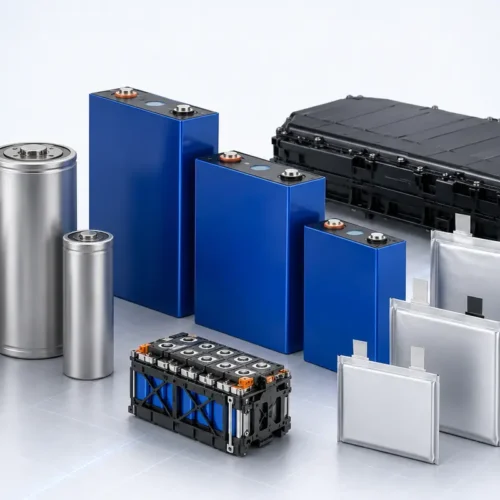
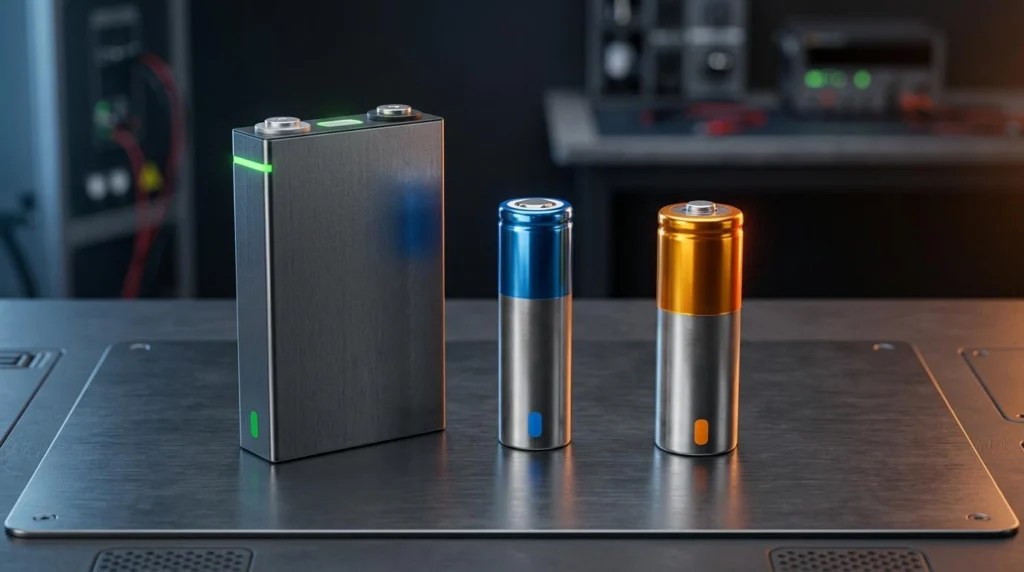
Prismatic battery cells are rechargeable cells enclosed in rigid rectangular cases, typically made of metal.
Unlike cylindrical cells, which have a round shape, prismatic cells use a rectangular form factor that can support space-efficient battery pack designs.
They are widely considered for applications such as:
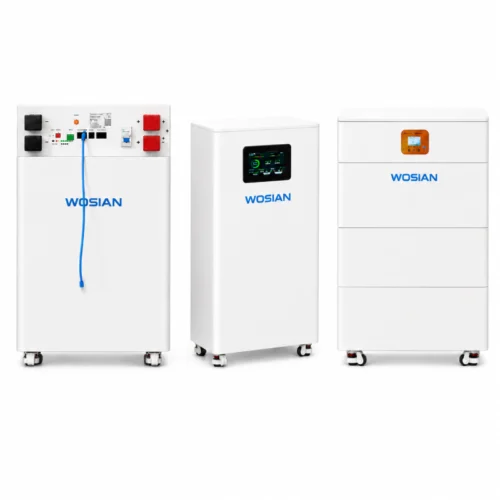
- Residential and commercial energy storage systems
- Electric vehicles and electric mobility
- Industrial battery packs
- Renewable energy storage
- Backup power systems
One important distinction is that prismatic describes the cell’s physical format, not its battery chemistry.
Prismatic cells can use LFP, NMC, and other lithium-ion chemistries. Their electrical and performance characteristics depend on the specific cell design.
1. What Are LFP Prismatic Battery Cells?
Lithium Iron Phosphate (LiFePO4), commonly called LFP, is a lithium-ion battery chemistry widely used in energy storage applications.
One of its main advantages is its relatively stable cathode chemistry. LFP cells are often selected for projects where thermal stability, cycle life, and long-term operating costs are important considerations.
Key Characteristics of LFP Cells
Thermal Stability
LFP chemistry generally offers better thermal stability than many nickel-based lithium-ion chemistries. However, proper battery management, protection circuits, and thermal design remain essential.
Long Cycle Life Potential
LFP cells can offer long cycle life under suitable charging, discharging, and temperature conditions. Actual cycle life varies significantly by model and test method.
Energy Storage Suitability
LFP is widely used in stationary energy storage, including residential batteries, commercial energy storage, and renewable energy systems.
Lower Energy Density
Compared with many NMC cell designs, LFP typically offers lower gravimetric energy density. This can be a trade-off in applications where weight and available space are tightly constrained.
2. What Are NMC Prismatic Battery Cells?
Nickel Manganese Cobalt (NMC) is another major lithium-ion battery chemistry.
NMC battery cells are often selected when energy density is a key consideration. This makes them relevant to applications where battery weight, size, and driving range influence system design.
Key Characteristics of NMC Cells
Higher Energy Density
NMC chemistry generally supports higher energy density than LFP, although actual performance depends on the cathode composition, cell design, and operating conditions.
Compact Energy Storage
For projects with limited weight or installation space, an appropriately selected NMC cell may provide advantages.
Electric Mobility Applications
NMC cells are used in various electric vehicle and mobility battery systems, where energy capacity and weight are important.
Thermal Management Requirements
NMC cells require carefully designed monitoring, protection, and thermal management systems. Battery safety should always be evaluated at both cell and pack levels.
3. LFP vs. NMC Battery Cells: Key Differences
The following comparison summarizes common characteristics of the two chemistries.
| Comparison | LFP Battery Cells | NMC Battery Cells |
|---|---|---|
| Battery chemistry | Lithium Iron Phosphate | Nickel Manganese Cobalt |
| Typical nominal cell voltage | Approximately 3.2 V | Approximately 3.6–3.7 V |
| Energy density | Generally lower | Generally higher |
| Cycle life | Often longer | Depends on formulation and design |
| Thermal stability | Generally higher | Requires careful thermal management |
| Material cost | Often lower | More dependent on nickel and cobalt costs |
| Common applications | Stationary energy storage, industrial systems | Electric mobility, weight-sensitive applications |
These are general technology comparisons rather than guaranteed specifications. Performance must be verified against the datasheet and test conditions of each individual model.
4. Which Battery Chemistry Should You Choose?
There is no single battery chemistry that is best for every project.
The right choice depends on how the battery will be used.
For Residential and Commercial Energy Storage
LFP cells are often a strong candidate for stationary energy storage systems.
For many of these projects, cycle life, thermal stability, system reliability, and long-term operating costs are more important than minimizing battery weight.
For Electric Mobility
NMC cells may be suitable for applications where higher energy density offers a meaningful benefit.
However, LFP is also widely used in electric vehicles, particularly when cost, durability, and operating requirements favor its characteristics.
The decision should be based on the complete vehicle and battery system design.
For Industrial Battery Packs
Both LFP and NMC can be considered for industrial battery packs.
Before selecting a chemistry, engineers should review the required voltage, usable energy, continuous current, peak power, temperature range, charging conditions, and mechanical integration.
5. Five Factors to Check Before Purchasing Prismatic Battery Cells
When comparing suppliers and models, consider the following factors.
1. Nominal Voltage and Capacity
Confirm that the cell voltage and rated capacity match your battery pack architecture.
2. Continuous Charge and Discharge Current
The cell must support the application’s normal and peak operating requirements.
3. Cycle Life Test Conditions
Cycle life figures should be evaluated alongside depth of discharge, temperature, current rate, and end-of-life capacity criteria.
4. Cell Dimensions and Weight
Check the physical dimensions, terminal layout, and installation requirements before designing the battery module.
5. Technical Documentation and Quality Requirements
Request relevant datasheets, test reports, traceability information, and applicable compliance documents. Requirements vary according to the battery’s destination market and intended application.
6. Explore Prismatic Battery Cell Options with WOSIAN
At WOSIAN, we help customers explore battery cell solutions for energy storage, electric mobility, and industrial battery applications.
Our prismatic battery cell offering includes LFP options such as 3.2V 100Ah, 280Ah, and 314Ah cells, subject to model availability. Customers interested in NMC chemistry can contact us to discuss available specifications and application requirements.
For project evaluation, please provide:
- Preferred chemistry: LFP or NMC
- Required nominal voltage and capacity
- Charge and discharge requirements
- Intended application
- Estimated order quantity
- Destination country or region
Our team can review your requirements and provide relevant product information.
Explore Prismatic Battery Cells
Contact WOSIAN for Specifications and Quotations
Frequently Asked Questions
Are all prismatic battery cells LiFePO4?
No. Prismatic refers to the rectangular cell structure. Prismatic lithium-ion cells can use LFP, NMC, or other battery chemistries.
Is LFP always safer than NMC?
LFP generally has advantages in thermal stability, but safety depends on many factors, including cell design, manufacturing quality, battery management, protection systems, and operating conditions. Neither chemistry should be considered risk-free.
Which battery chemistry has a longer cycle life?
LFP often provides a cycle life advantage under comparable conditions. However, actual cycle life depends on the specific model, depth of discharge, charging rates, temperature, and testing methodology.
Is NMC better for electric vehicles?
NMC can be advantageous when higher energy density is needed. LFP is also a major electric vehicle chemistry, particularly in applications where cost and durability are priorities.
How can I request battery cell specifications?
Contact WOSIAN with your application, preferred chemistry, required capacity, and expected order quantity. Our team can provide information about relevant available cell options.
Looking for the Right Battery Cell for Your Project?
Whether you are evaluating LFP cells for energy storage or NMC cells for electric mobility, selecting the correct battery chemistry is essential to successful system integration.
Visit www.wosian.com to explore our battery solutions and contact us for product specifications and purchasing inquiries.
author:WOSIAN Battery Solutions