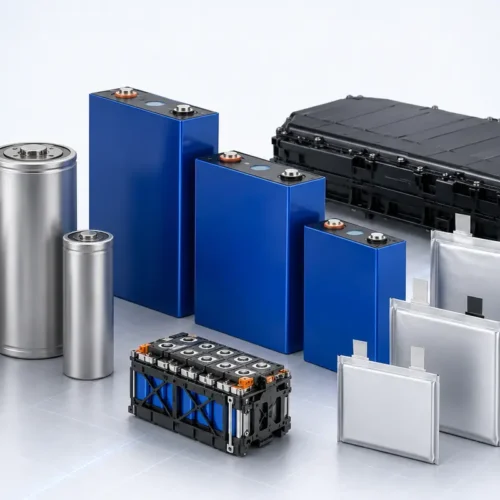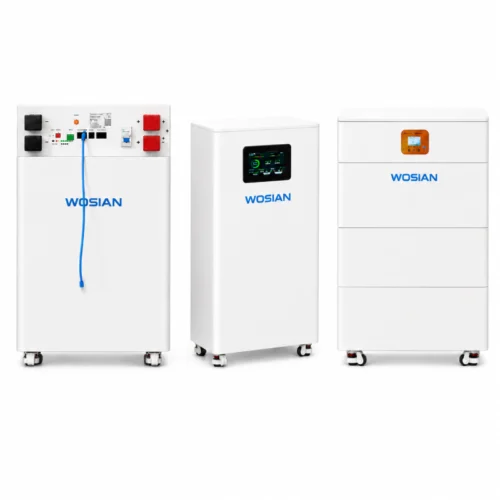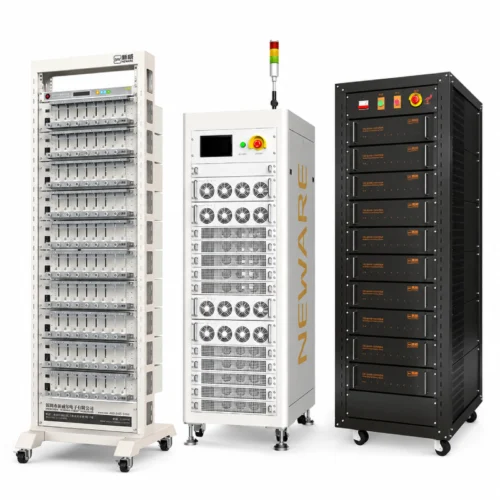


Lithium-ion batteries power electric vehicles, energy storage systems, portable electronics, and many other applications. However, mechanical damage can compromise battery integrity and create potential electrical and thermal hazards. Battery manufacturers therefore need reliable testing equipment to evaluate battery behavior under specified mechanical abuse conditions.
The Battery Nail Penetration and Impact Testing Machine plays an important role in battery safety evaluation. It provides a dedicated testing platform for conducting defined penetration or impact tests on compatible battery specimens. By combining suitable mechanical test equipment with temperature monitoring, observation, and data recording, laboratories can investigate battery responses and document test results.
WOSIAN provides battery testing equipment and configurable solutions for battery safety evaluation. This article explains the applications of nail penetration and impact testing machines, their key equipment considerations, and how manufacturers can select a suitable testing solution for their battery testing requirements.
1. What Is a Battery Nail Penetration and Impact Testing Machine?
A Battery Nail Penetration and Impact Testing Machine is specialized equipment used to evaluate battery behavior under defined mechanical abuse conditions. Depending on the equipment configuration, a testing system may support nail penetration testing, impact testing, or separate test configurations for these procedures.
Nail penetration testing investigates battery behavior when a penetrating object interacts with the specimen. Impact testing evaluates the response to a specified mechanical impact. Both tests can help engineers investigate potential damage and observe the battery’s response under controlled test conditions.
Typical applications include:
- Lithium-ion battery cell safety evaluation.
- Battery module mechanical abuse testing.
- Battery pack safety assessment, where the equipment and test procedure support the specimen.
- Research and development of battery materials and structures.
- Quality verification and product safety evaluation.
- Investigation of battery failure mechanisms.
The appropriate test method depends on the battery design, specimen dimensions, applicable standard, and intended evaluation objectives.
Importantly, a machine that supports cell-level testing does not automatically support full battery pack testing. Customers should confirm the specimen size, fixture capacity, mechanical test parameters, and applicable test requirements before selecting equipment.
2. Battery Nail Penetration Testing Machine
A Battery Nail Penetration Testing Machine evaluates how a battery responds to a defined penetration procedure. Researchers commonly use this type of equipment to investigate potential internal damage and the resulting electrical or thermal response.
How Does Nail Penetration Testing Work?
The operator installs the battery specimen in a suitable fixture and configures the test according to the applicable procedure. The machine then drives the specified penetrating object into the specimen under the defined test conditions.
During the test, the system may support observation and monitoring of parameters such as surface temperature, voltage, and visible changes, depending on the instrumentation and test configuration.
After the procedure, engineers examine the specimen and compare the recorded results with the relevant acceptance criteria.
Why Is Equipment Design Important?
The mechanical performance of the testing machine directly affects its suitability for a particular test procedure. Therefore, engineers should evaluate several equipment characteristics.
Penetration mechanism: The machine must provide a suitable mechanism for executing the required penetration procedure.
Fixture compatibility: The fixture must securely accommodate the intended specimen and maintain the required test arrangement.
Parameter control: The available controls must support the penetration parameters specified by the applicable test method.
Temperature monitoring: Compatible temperature sensors can help engineers record thermal changes during and after testing.
Observation and data recording: Appropriate observation and recording arrangements help researchers document test behavior and evaluate the results.
Safety enclosure: The test system should provide protection appropriate to the battery’s energy level, chemistry, specimen size, and potential failure hazards.
The exact specifications and available functions vary by machine model. Customers should confirm these details against the equipment datasheet and their intended test procedure.
3. Battery Impact Testing Machine
A Battery Impact Testing Machine evaluates battery behavior under a defined mechanical impact. It helps engineers investigate the structural integrity of a battery and identify possible consequences of mechanical damage.
Impact testing may involve a specified impactor, fixture arrangement, specimen orientation, and impact condition. The exact configuration depends on the relevant test standard and the type of battery under evaluation.
What Can Impact Testing Reveal?
Impact testing can help engineers investigate:
- Damage to the battery enclosure.
- Structural deformation and mechanical integrity.
- Potential damage to internal components or electrical connections.
- Changes in voltage and temperature, where monitored.
- Visible signs of leakage, smoke, or fire.
- The battery’s condition after the specified test.
These observations support battery safety assessment, but the test results must be interpreted according to the applicable procedure and acceptance criteria.
Why Choose a Dedicated Impact Testing Machine?
A dedicated testing machine provides a controlled mechanical arrangement for executing the specified impact procedure. Compared with an improvised setup, a purpose-designed system can help laboratories maintain consistent specimen positioning and repeatable test conditions.
When selecting equipment, engineers should examine the impact mechanism, fixture design, specimen dimensions, parameter adjustment capabilities, observation arrangements, and safety provisions.
For battery pack testing, the machine must also accommodate the pack’s size, mass, structural design, and required impact conditions.
4. Combined Nail Penetration and Impact Testing Solutions
Some laboratories need to conduct both nail penetration and impact testing during battery development or safety evaluation. In these cases, a combined solution or a coordinated equipment configuration may help address multiple testing requirements.
However, nail penetration and impact testing use different mechanical mechanisms. A combined solution must therefore support the specific requirements of each test rather than simply treating both procedures as interchangeable functions.
Before purchasing a combined system, customers should confirm:
- Whether the equipment supports both test methods.
- Whether each test requires a separate mechanism or fixture.
- The supported battery cell, module, or pack dimensions.
- The required mechanical test parameters.
- Temperature monitoring and observation capabilities.
- Data recording and reporting functions.
- The applicable standards and test acceptance criteria.
- The safety arrangements required for the intended specimen.
If one machine cannot meet both procedures, separate dedicated machines may provide a more suitable configuration.
WOSIAN can assess equipment requirements based on the customer’s battery specifications, intended tests, and laboratory setup.
5. The Role of Temperature Monitoring in Battery Safety Testing
Temperature monitoring is an important part of many battery safety evaluations. Mechanical damage can cause local heating, and certain failure conditions may produce a rapid temperature increase.
By recording temperature before, during, and after a test, engineers can investigate the thermal response of the battery under the specified conditions.
Depending on the testing system, temperature monitoring may include:
- Initial specimen temperature.
- Surface temperature at selected measurement locations.
- Temperature changes during the test.
- Maximum recorded temperature.
- Temperature behavior during the post-test observation period.
The sensor type, measurement range, response time, sampling rate, and installation position should match the test requirements.
For tests that require additional instrumentation, engineers may also need voltage monitoring, video recording, or other data acquisition equipment.
Temperature data alone cannot establish the complete safety performance of a battery. Researchers should evaluate it alongside the test procedure, electrical measurements, visible observations, and required acceptance criteria.
6. Battery Nail Penetration and Impact Testing for Cells, Modules, and Packs
Battery safety testing can target individual cells, battery modules, or complete battery packs. Each level presents different mechanical and electrical considerations.
Battery Cell Testing
Cell-level testing focuses on the behavior of an individual battery cell under the specified test conditions. Fixture size, terminal arrangement, cell chemistry, and test parameters influence equipment selection.
Battery Module Testing
A battery module contains multiple interconnected cells and may include structural supports and electrical connections. Testing therefore requires suitable fixtures and equipment capable of accommodating the module’s dimensions and configuration.
Battery Pack Testing
A complete battery pack may include an enclosure, multiple modules, electrical interconnections, a battery management system, and thermal management components.
Consequently, pack-level safety testing may require larger fixtures, higher mechanical capacity, additional instrumentation, and a suitable safety enclosure.
Not every nail penetration or impact test applies to every specimen level. Before selecting a machine, customers should identify the required test standard and confirm whether it specifies cell-level, module-level, or pack-level testing.
7. How to Select a Battery Nail Penetration and Impact Testing Machine
Choosing suitable equipment requires a clear understanding of the battery specimen and the intended test procedures.
Test Method and Applicable Standard
First, identify whether the project requires nail penetration, impact, crush, or another safety test. Then determine the applicable standard and the specific test conditions.
Different standards may prescribe different fixtures, test parameters, specimen conditions, and acceptance criteria.
Specimen Size and Mechanical Capacity
Confirm the battery’s dimensions, mass, shape, and structural design. The machine must accommodate the specimen and provide the mechanical capability required by the selected test.
Test Parameter Control
Review the available parameter settings and control functions. The machine should support the specified test procedure and provide adequate repeatability.
Temperature and Electrical Monitoring
Determine whether the project requires temperature sensors, voltage monitoring, current measurement, video recording, or other instrumentation.
Where the equipment does not include these functions, customers should confirm whether compatible external instruments can support the test.
Safety Enclosure and Protection
Battery safety tests can produce high temperatures, smoke, fire, or other hazardous conditions. Therefore, the testing arrangement should include protective measures appropriate to the battery’s chemistry, stored energy, and potential failure modes.
Customers should evaluate the enclosure, observation arrangements, ventilation or exhaust requirements, emergency shutdown, and other applicable safety provisions.
Data Recording and Reporting
For research and quality control, recorded test conditions and results help laboratories maintain traceability. Confirm which parameters the system records and whether it supports the required data export and reporting workflow.
8. WOSIAN Battery Safety Testing Equipment
WOSIAN provides battery testing equipment and configurable solutions for battery performance and safety evaluation.
For projects involving nail penetration and impact testing, the appropriate equipment configuration depends on the specimen type, mechanical test requirements, monitoring needs, and applicable standards.
Before requesting a quotation, customers should prepare the following information:
- Battery type and chemistry.
- Specimen level: cell, module, or complete pack.
- Battery dimensions and mass.
- Required test method: nail penetration, impact, or both.
- Applicable test standard and required parameters.
- Temperature monitoring and other instrumentation needs.
- Test enclosure and safety requirements.
- Data recording and reporting requirements.
With these details, WOSIAN can assess the appropriate equipment configuration and clarify which testing functions the proposed system supports.
Customers should confirm the actual machine specifications, test capabilities, safety provisions, and standard applicability before purchasing equipment.
Frequently Asked Questions
What Is a Battery Nail Penetration Testing Machine Used For?
A battery nail penetration testing machine executes a defined penetration procedure to investigate battery behavior under mechanical abuse conditions. Depending on the test setup, engineers may monitor temperature, voltage, and visible changes during and after the test.
What Is the Purpose of a Battery Impact Testing Machine?
A battery impact testing machine applies a specified mechanical impact to a battery specimen. The test helps engineers investigate structural damage and evaluate the battery’s response according to the applicable test procedure.
Can One Machine Perform Both Nail Penetration and Impact Testing?
Some solutions may support both procedures, but the mechanisms and fixtures differ. Customers should confirm that the specific model supports both test methods and meets the relevant test requirements.
Can These Machines Test Complete Battery Packs?
Pack-level testing is possible only when the equipment supports the pack’s dimensions, mass, mechanical test requirements, and safety needs. Customers should verify pack compatibility before selecting a machine.
Is Temperature Monitoring Necessary During Battery Safety Testing?
Temperature monitoring is required or recommended in many test procedures because it helps engineers investigate thermal changes. The exact monitoring requirements depend on the applicable standard and test objectives.
Conclusion
Battery nail penetration and impact testing machines help manufacturers and laboratories investigate battery behavior under defined mechanical abuse conditions. These systems support safety evaluation by providing controlled test arrangements and, where configured, temperature monitoring, electrical measurements, and test data recording.
For effective equipment selection, engineers should consider the test method, battery specimen level, mechanical requirements, instrumentation, and safety provisions together.
WOSIAN provides battery testing equipment and configurable solutions to support customer-specific testing requirements. Contact WOSIAN to discuss your battery nail penetration and impact testing machine requirements and identify a suitable equipment configuration.