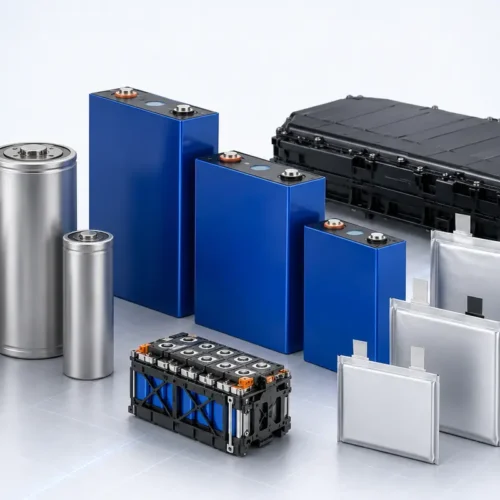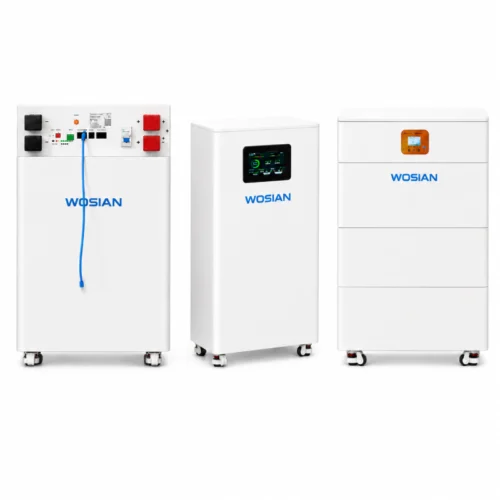


Power batteries play a critical role in electric vehicles, commercial vehicles, and other high-power applications. However, changing environmental temperatures can significantly affect their capacity, power output, charging efficiency, and service life. Therefore, battery manufacturers need reliable testing methods to evaluate performance under different temperature conditions.
Power EV battery pack testing solutions combine battery charge and discharge testers with high and low temperature test chambers. This combination allows engineers to investigate battery behavior under controlled environmental conditions and compare test results across different temperatures. In addition, long-term cycling tests help researchers track capacity degradation and identify performance changes over time.
WOSIAN provides battery testing equipment and configurable testing solutions for battery manufacturers, research laboratories, and quality control teams. By selecting suitable equipment and test procedures, customers can build a testing system that meets their electrical, environmental, and data acquisition requirements.
1. Why Is Temperature Testing Important for Power Battery Packs?
Temperature affects the electrochemical reactions and internal resistance of lithium-ion batteries. As a result, the same battery pack may deliver different amounts of energy under different environmental conditions.
At low temperatures, slower electrochemical processes and increased polarization can reduce available discharge capacity and power output. Furthermore, charging a lithium-ion battery below its permitted temperature range may increase the risk of lithium plating, depending on the battery chemistry and operating conditions.
High temperatures create different challenges. Although elevated temperatures may improve certain short-term performance characteristics, they can also accelerate aging and affect battery materials, electrical connections, and thermal management components. Excessive temperatures may also increase safety risks.
For these reasons, engineers should evaluate battery performance across the temperature range relevant to the intended application.
Typical test objectives include:
- Measuring discharge capacity at different temperatures.
- Comparing charge and discharge performance under controlled conditions.
- Evaluating internal resistance and voltage response.
- Tracking capacity retention during long-term cycling.
- Investigating temperature-dependent power capability.
- Monitoring cell voltage consistency and battery pack temperature.
- Evaluating available battery management system (BMS) data.
- Identifying abnormal performance under defined test conditions.
Together, these measurements provide a more complete picture of battery performance than room-temperature testing alone.
2. How Does an Integrated Battery Pack Temperature Testing System Work?
An integrated testing system combines a battery cycler, a high and low temperature test chamber, electrical connections, temperature sensors, and data acquisition software.
First, engineers place the battery pack inside a chamber that can maintain the required environmental temperature. Next, they connect the pack to a compatible battery tester through suitable electrical feedthroughs. The tester then applies the programmed charge or discharge profile while the chamber maintains the target temperature.
Meanwhile, the measurement system records electrical parameters and temperature data. Engineers can subsequently compare these results to understand how environmental conditions influence battery performance.
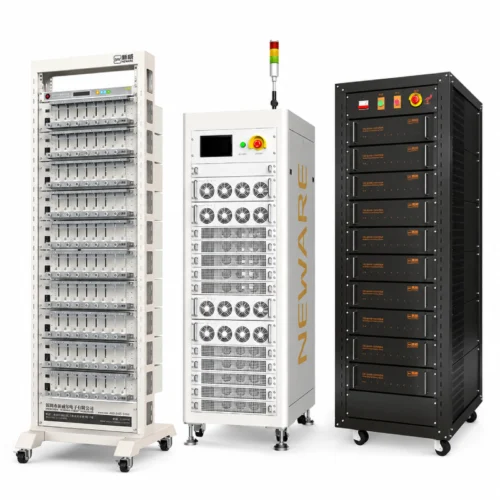
Battery Pack Charge and Discharge Tester
A battery cycler applies programmed charging and discharging profiles within its rated voltage, current, and power limits. Depending on the configuration, it can measure voltage, current, capacity, energy, and other electrical parameters.
For high-power battery packs, engineers should select a tester that meets the pack’s electrical specifications and supports the intended test profiles.
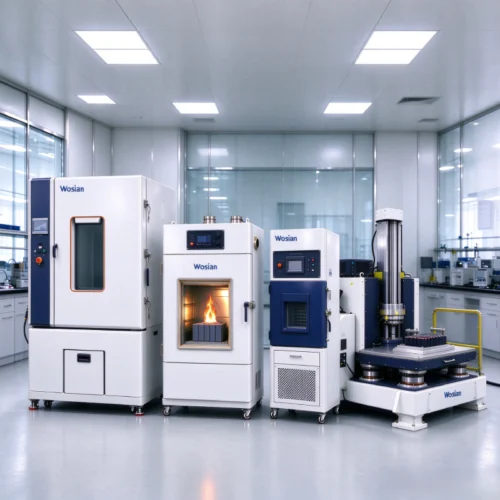
High and Low Temperature Test Chamber
A temperature chamber creates the environmental conditions required for battery evaluation. When selecting a chamber, engineers should consider its temperature range, temperature uniformity, stability, internal dimensions, and heating and cooling capabilities.
Additionally, the chamber must accommodate the battery pack, fixtures, sensors, wiring, and expected heat generation during testing.
Temperature Monitoring and Data Acquisition
Temperature sensors help engineers monitor the battery pack at specified measurement locations. By recording temperature alongside voltage and current, the data acquisition system helps researchers identify relationships between thermal conditions and electrical performance.
Where the system supports synchronized data logging, engineers can also correlate temperature changes with capacity, voltage response, and other test results.
Test Control and Analysis Software
Test software manages programmed charge and discharge steps, records measurements, and organizes test results. Depending on the system configuration, engineers can operate the battery tester and temperature chamber independently or coordinate their functions through compatible interfaces.
As a result, an integrated setup can reduce manual intervention and improve consistency across repeated tests.
3. How to Test Battery Capacity at High and Low Temperatures
Capacity testing helps engineers determine how much charge a battery pack can deliver under specified conditions. Since temperature affects available discharge capacity, a reliable comparison requires consistent test procedures and clearly defined reference conditions.
A typical temperature-dependent capacity test follows these steps:
- Prepare the battery pack. Check the battery specifications, initial condition, state of charge (SOC), and permitted operating limits.
- Set the chamber temperature. Select the target temperature according to the test plan.
- Stabilize the battery temperature. Follow the specified stabilization procedure before starting the measurement.
- Run the charge or discharge test. Apply the defined current, voltage limits, and operating sequence.
- Record the test data. Measure voltage, current, capacity, energy, and temperature as required.
- Compare the results. Evaluate the measurements against a reference temperature or another defined test condition.
During a discharge test, engineers can calculate capacity by integrating current over time:
Q = ∫ I(t) dt
When current is expressed in amperes and time in hours, the resulting capacity is measured in ampere-hours (Ah).
To compare performance across temperatures, engineers can calculate capacity retention as follows:
Capacity retention (%) = Q_T / Q_ref × 100%
Here, Q_T represents the measured capacity at the target temperature, while Q_ref represents capacity under the defined reference condition.
This comparison reveals how much capacity the battery can deliver under the selected environmental conditions. However, low-temperature capacity reduction does not automatically indicate permanent battery degradation. In many cases, the battery may recover some of its available capacity after returning to the reference temperature.
Therefore, engineers should distinguish between temporary temperature-related performance changes and irreversible capacity loss.
4. How to Evaluate Battery Capacity Degradation at Different Temperatures
Capacity degradation describes the reduction in battery capacity during aging or repeated cycling. Temperature can influence this process, making temperature-controlled cycling an important part of battery life evaluation.
To investigate degradation, engineers can compare battery packs or representative specimens under different temperature conditions. Each test group should follow a defined cycling procedure so that researchers can identify meaningful differences.
A typical degradation study includes the following activities:
- Measure the initial reference capacity.
- Define the charging and discharging current.
- Establish the voltage limits and SOC window.
- Maintain the specified environmental temperature.
- Run repeated cycles according to the test plan.
- Measure reference capacity at predefined intervals.
- Compare capacity retention and degradation trends.
Engineers can calculate capacity retention after aging using the following formula:
Capacity retention (%) = Q_n / Q_0 × 100%
They can also calculate capacity degradation:
Capacity degradation (%) = (1 − Q_n / Q_0) × 100%
In these equations, Q_0 represents the initial reference capacity, while Q_n represents the measured capacity after a specified number of cycles or aging period.
For an accurate comparison, researchers should keep the reference capacity procedure, cycling current, voltage limits, SOC window, rest periods, and measurement conditions consistent.
Moreover, they should distinguish between reversible temperature effects and irreversible aging. For example, a battery may show lower discharge capacity at low temperatures but recover some capacity when returned to the reference temperature. A standardized capacity test at the reference temperature can help quantify the remaining capacity after the aging procedure.
By combining temperature-controlled cycling with periodic capacity measurements, engineers can develop capacity retention curves and investigate how different environmental conditions affect battery aging.
5. What Other Battery Performance Parameters Should Engineers Test?
Capacity alone cannot fully describe battery pack performance. Depending on the application, engineers may also evaluate internal resistance, power capability, energy efficiency, voltage consistency, and temperature distribution.
Charge and Discharge Performance
Charge and discharge tests measure voltage, current, capacity, energy, and operating time under defined conditions. By comparing these parameters at different temperatures, engineers can identify changes in battery behavior.
However, low-temperature charging requires particular attention. Test operators should follow the battery manufacturer’s permitted operating limits and the applicable test procedure.
DC Internal Resistance
Direct current internal resistance (DCIR) testing evaluates the voltage response to a defined current change.
A simplified calculation uses the following formula:
R = ΔV / ΔI
Here, ΔV represents the voltage change and ΔI represents the applied current change.
The measured resistance depends on temperature, SOC, pulse duration, and the test method. Therefore, engineers should keep these conditions consistent when comparing different battery packs or test groups.
At pack level, the result may also include the effects of electrical interconnections and contact resistance.
Power Capability
Power capability testing examines how much power a battery pack can deliver or accept under specified operating conditions. Engineers can use defined current pulses to evaluate voltage response and determine whether the pack meets the required performance criteria.
Temperature-dependent power testing is particularly useful for applications that operate in cold climates or experience substantial temperature variation.
Voltage Consistency and Temperature Distribution
For battery packs with accessible cell-level measurements, engineers can compare individual cell voltages or monitored cell groups. In addition, multiple temperature sensors can reveal thermal gradients across the pack.
These measurements help researchers investigate cell imbalance, uneven heating, and other conditions that may require further analysis.
Energy Efficiency
That describes the relationship between discharged energy and charged energy during a defined cycle.
Energy efficiency (%) = E_discharge / E_charge × 100%
Engineers should specify the measurement boundaries and test conditions before comparing results. For example, they should clarify whether the calculation includes only battery energy or also accounts for auxiliary equipment consumption.
BMS Monitoring and Protection Functions
Where the battery pack supports BMS communication, engineers can monitor available cell voltage, pack voltage, current, temperature, SOC, and fault information.
Comparing BMS data with independent measurements helps researchers investigate discrepancies and evaluate system behavior. In addition, engineers should follow appropriate safety procedures when testing protection functions and avoid exceeding permitted operating limits without an approved test setup.
6. A Typical Workflow for High and Low Temperature Battery Pack Testing
A structured workflow improves repeatability and helps engineers compare results across specimens.
Step 1: Define the testing requirements
Identify the battery chemistry, nominal voltage, capacity, maximum current, operating temperature range, and evaluation objectives.
Step 2: Select compatible equipment
Choose a battery cycler that meets the required voltage, current, and power ratings. Then select a temperature chamber that provides the necessary environmental range, internal dimensions, and control performance.
Step 3: Install the battery pack and sensors
Position the battery pack securely and connect the electrical test circuit. Install temperature sensors and communication interfaces as required by the test plan.
Step 4: Establish the target temperature
Set the chamber to the required temperature and follow the specified stabilization procedure. Confirm that the test conditions meet the defined criteria before starting the measurement.
Step 5: Execute the test profile
Run the programmed charging, resting, discharging, or cycling sequence. Throughout the test, monitor electrical parameters, temperature, and relevant system status.
Step 6: Analyze the results
Compare capacity, energy, DCIR, power response, and temperature distribution against the reference data or acceptance criteria.
Step 7: Generate the test report
Document the battery identification, equipment configuration, environmental conditions, test profiles, measurement results, and any deviations.
For long-term aging studies, engineers can repeat this process at predefined intervals. Consequently, they can track capacity retention and other performance indicators throughout the test period.
7. How to Choose the Right Battery Cycler and Temperature Chamber
The battery tester and temperature chamber must work together as a compatible system. Therefore, engineers should evaluate both components against the complete test requirements.
Battery Voltage, Current, and Power
Confirm the battery pack’s nominal and maximum voltage, charge and discharge current, and required power. The selected cycler must support the intended test profiles within its rated operating range.
Temperature Range and Control Performance
Check the chamber’s minimum and maximum temperatures, stability, uniformity, and heating and cooling capabilities. If the test requires temperature changes between several setpoints, consider the required ramp rate and stabilization time.
Chamber Size and Heat Load
The chamber must accommodate the battery pack, fixtures, sensors, and required clearances. Furthermore, engineers should assess the heat generated during testing because it can affect the chamber’s ability to maintain the target temperature.
For high-power applications, verify the chamber’s suitability for the expected heat load rather than relying on its rated temperature range alone.
Electrical Connections and Cable Feedthroughs
High-current tests require suitable cables, connectors, insulation, and feedthroughs. Proper cable selection also helps control resistance and unwanted heating.
Before testing, verify that the complete electrical path supports the expected current and complies with the applicable safety requirements.
Data Acquisition and Software Integration
Consider the required measurement channels, sampling rate, temperature logging, data export, and report generation. If the project requires coordinated operation between the chamber and battery cycler, confirm that the selected equipment and software support this function.
Safety and Fault Handling
Power battery packs can store substantial energy and present electrical and thermal hazards. For this reason, engineers should assess the battery chemistry, energy level, potential failure modes, and test environment before selecting the complete setup.
Depending on the application, the system may require temperature monitoring, overcurrent protection, emergency shutdown, suitable containment, exhaust provisions, and additional protective measures. The chamber must also be suitable for the intended battery testing application.
8. WOSIAN Power Battery Pack Testing Solutions
WOSIAN provides battery testing equipment and configurable solutions for battery performance evaluation, charge and discharge testing, and related testing applications.
For temperature-dependent power battery pack evaluation, customers can define a system configuration around their electrical requirements, chamber specifications, test procedures, and data acquisition needs.
Depending on the project, the solution may include:
- Battery charge and discharge testing equipment.
- A compatible high and low temperature test chamber.
- Temperature sensors and electrical measurement channels.
- Test control and data logging software.
- Suitable fixtures, cables, and connection arrangements.
- BMS monitoring or communication integration, where supported.
To help determine a suitable configuration, customers should provide the battery pack voltage, capacity, maximum current, specimen dimensions, required temperature range, test profiles, and number of test channels.
For capacity degradation studies, customers should also describe the planned cycling conditions, test duration, reference capacity procedure, and required reporting parameters.
With these details, WOSIAN can assess the appropriate equipment ratings and integration options for the intended application. Customers should confirm the final temperature range, electrical ratings, software functions, and safety features against the proposed configuration.
Frequently Asked Questions
Can engineers test a battery pack inside a high and low temperature chamber?
Yes. Engineers can perform temperature-dependent charge and discharge tests when the chamber, battery cycler, electrical feedthroughs, and safety arrangements support the intended conditions. The complete setup must accommodate the battery pack’s electrical ratings, heat generation, and environmental requirements.
How does low temperature affect battery capacity?
Low temperatures can reduce available discharge capacity and increase polarization. The effect depends on battery chemistry, SOC, current rate, and temperature. Some of the reduction may be reversible when the battery returns to a suitable reference temperature.
Can high temperature testing evaluate battery degradation?
Yes. Engineers can use controlled high-temperature cycling or aging tests to investigate temperature-dependent degradation. However, the results depend on temperature, SOC, current rate, test duration, and other conditions. Accelerated testing does not automatically translate into an equivalent real-world service life.
Which parameters can a battery pack testing system measure?
Depending on the equipment configuration, the system can measure voltage, current, capacity, energy, temperature, DCIR, and charge or discharge performance. Additional functions, such as cell-level voltage monitoring and BMS data acquisition, require suitable sensors and interface support.
What information does WOSIAN need to configure a battery pack temperature testing solution?
Useful information includes battery pack voltage, capacity, maximum current, dimensions, required temperature range, charge and discharge profiles, channel count, measurement accuracy, and safety requirements.
Conclusion
High and low temperature testing helps engineers understand how environmental conditions affect power battery pack capacity, aging, and electrical performance. By combining a suitable battery cycler with a compatible temperature chamber, manufacturers can evaluate temperature-dependent capacity, monitor degradation, and investigate changes in internal resistance and power capability.
Furthermore, a structured testing workflow improves repeatability and supports meaningful comparisons across different battery packs and environmental conditions.
WOSIAN provides battery testing equipment and configurable solutions to help customers develop testing systems that match their electrical, environmental, and data acquisition requirements.